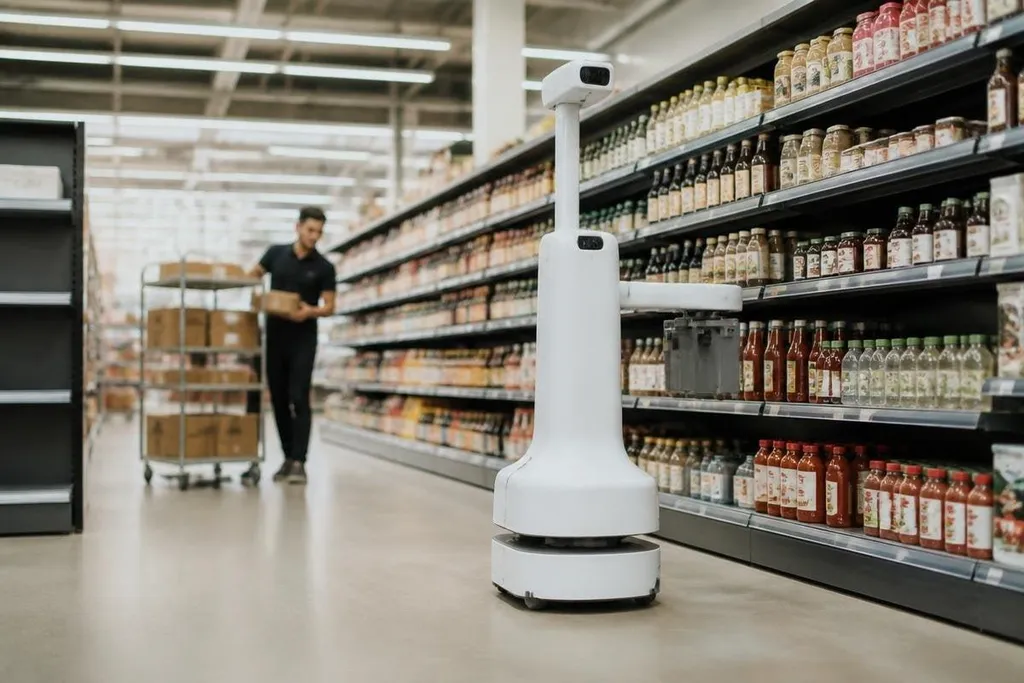
A retail robot can scan a shelf, move stock, or guide a shopper. Its value depends on what happens after the demo, when people, boxes, narrow aisles, and changing prices share the same floor.
- Shelf data must lead to a clear store task.
- Safety checks matter as much as movement.
- A trial needs a cost, a time limit, and a result to measure.
Start with the store task
Retail teams should begin with one repeated job. A robot may check stock, carry items from a back room, collect price data, or guide shoppers to a product. Each task needs a clear finish point before anyone picks a machine.
Shelf scanning sounds simple until the robot must read labels at different heights, deal with blocked views, and tell old stock from new stock. The useful question is not whether the robot can move through a shop. It is whether its data helps a worker fix an empty shelf during the same shift.
That link between detection and action should shape the trial. A camera can find a gap, but the store still needs a person, a stock location, and a process for filling it. If the robot creates reports that nobody uses, the store has bought another screen instead of help.
Movement is only one part
A retail robot shares space with shoppers and staff. It must stop when someone steps into its path, recover after a blocked route, and make its status clear to people nearby.
LiDAR measures distance with laser pulses. Cameras add pictures that can help the robot identify shelves, signs, and boxes. The robot combines these inputs with maps and wheel or leg movement so it can locate itself inside the store.
That system still needs a fallback. A blocked aisle, a moved display, or a dropped item can change the route the robot expected. Store staff should know how to pause the robot, move it by hand when allowed, and report the fault without calling a specialist for every small problem.
The physical design matters too. A tall body may see over a display but block a narrow path. A low base may fit under shelves but lose a clear view of signs.
Retail teams need the robot's width, turning space, weight, noise level, and stop controls before a trial begins.
Data has to reach the right person
A stock report only helps after it reaches the person who can act on it. That may be a shelf worker, a supervisor, or a central stock team. The robot's software should show the location, item, time, and reason for the alert in plain language.
That alert gives a report a useful test: did the robot find the item it named, and did the timing hold? Robot24.com can place the robot model, task, trial site, and date beside the maker's claim, so you can judge whether the system is ready for a store floor or still belongs in a demo. The next question is what happens to the images and customer data it collects.
Stores also need rules for images and customer data. A camera that scans shelves may also record people in the aisle. The trial plan should state what the robot stores, how long it keeps the data, who can view it, and how the team deletes it.
What to ask before a trial
A short trial gives a store a better answer than a broad promise. Put these points in the trial document:
- Name the task: write down the shelf, stock, or carrying job the robot must complete.
- Set the route: mark the aisles, lifts, doors, and areas the robot may enter.
- Record staff time: measure how long workers spend checking alerts, clearing routes, and fixing errors.
- Check safety actions: test the stop button, blocked-route response, and manual recovery process.
- Count useful results: record completed tasks and usable alerts, not patrol distance alone.
- Set the exit rule: decide the result that ends the trial, extends it, or sends the robot back.
The limit that still needs proof
Retail robots face a harder test than a quiet factory floor. The layout changes, people move without warning, and each store has its own stock process.
A robot may perform well on one task and still fail as a general store worker. That is why a buyer should ask for task records from the target store, then check the cost of staff time, service, charging, repairs, and software before signing a wider order.
I'd wait for measured results from the exact store task before buying a large fleet. The next useful proof is simple: how many completed shelf tasks did the robot produce in one normal shift, and how much staff time did those tasks save?